

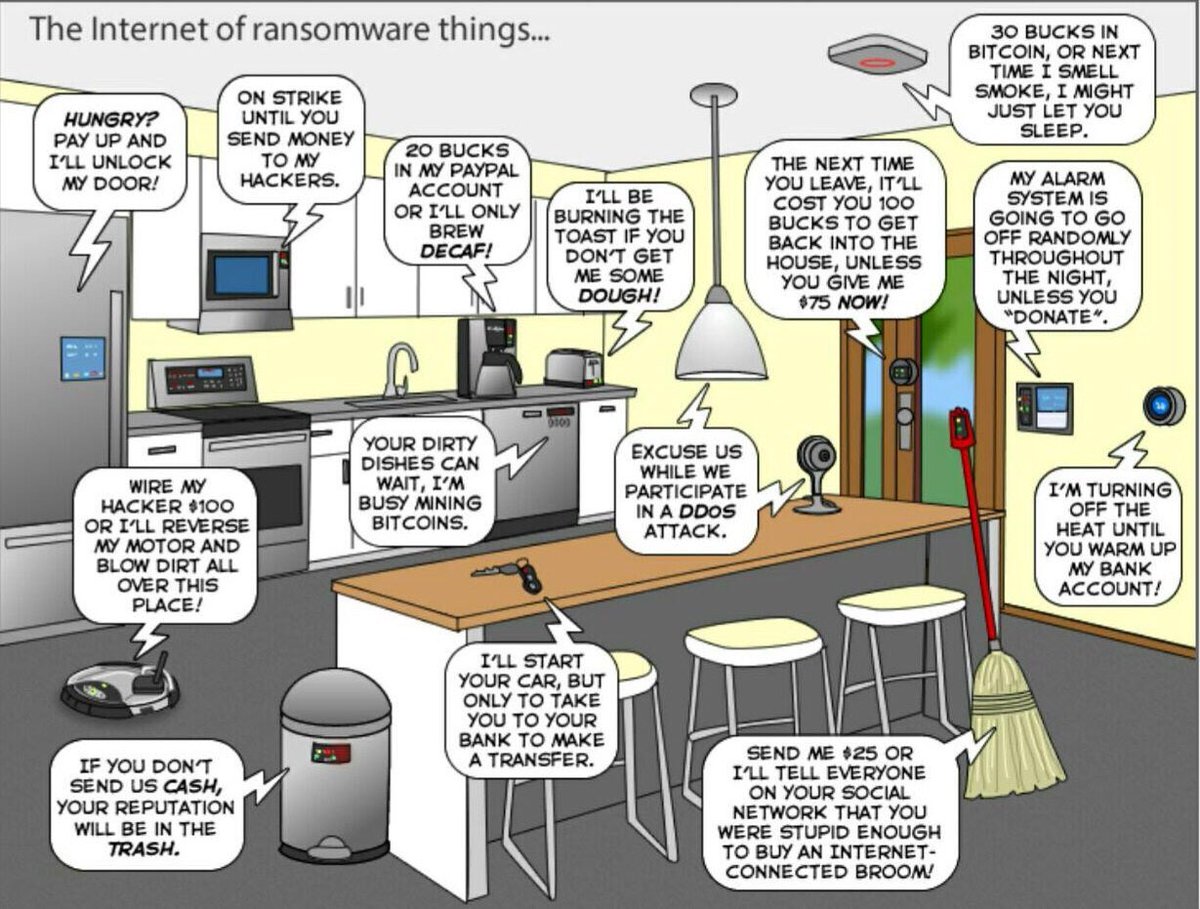
By now, anyone with any connection to security is aware of the WannaCry ransomware attack, and it says something, that on the Wiki entry, it is already listed amongst major incidents with Anthem, Sony Pictures, and the US Election. As a quick review, the attack, leveraging the leaked NSA tool EternalBlue, took advantage of vulnerabilities in Microsoft’s SMB implementation. The company issued a critical security bulletin, MS17-010 (CVE-2017-0144) on March 14, 2017, along with a patch for new versions of the OS. Note that this was a 1-day exploit, and not a zero-day exploit since it was announced and patched. But the issue is that older versions of the OS were still vulnerable, not every organization is on top of patches, and in some countries, the high percentage of bootleg software effectively disconnected the user from patching. Nonetheless, Cavirin can play an integral role in helping to identify and remediate these types of vulnerabilities.
First off, Cavirin’s partner SecPod included the notification in its March 16, 2017 SCAP Feed Release. This was two days after the Microsoft announcement. This is automatically included in Cavirin’s Patches & Vulnerabilities policy pack, which continually updates the live deployment. Based on this notification, the customer may quickly scan their environment and identify vulnerable resources. They may then manually patch their workloads, or may have in place an automated mechanism (i.e., Chef, Ansible) to pull down the Microsoft patch and update their systems.
- Details
- Category: Trending in Security

Hybrid Solutions that natively work in the Cloud and On-Premise, equally well
This is the fourth blog in a series detailing workload best practices.
The first blog, 'Securing Modern Workloads', is available here
The second blog, 'Control Your Cloud', is available here
The third blog, 'Agility in Security', is available here
-------------------
As you are juggling between on-premise, cloud-first and cloud-only strategies? Wouldn’t it be nice if you could just lift-and-shift your current security tools? Hybrid cloud security tools natively work in both environments equally well.
As you are embracing the digital transformation for your organization, you should evaluate your security tools and ensure they have these important criteria:
- Mix and match the workload origin
- Product design and security controls
- Minimize operational complexity
- Pricing
Let us look at these briefly.
Mix and match the workload origin for a Hybrid Cloud
Digital transformation to migrate workloads to the cloud may take anywhere between 6 months to 24 months. During this time, it is important for you to maintain the security posture of the current on-premise workloads and at the same time begin to look at the security posture of your migrated workloads. It would be great if you could continue to use the same tools that could offer you a monothematic view of both your on-premise and cloud workloads. Adopting new tools might take some time and may not produce composite reports combining your on-premise and cloud workloads.
For example, take this scenario. You have a web server farm with 10 on-premise Red Hat Linux servers. You begin to transition them in the cloud. Mid-way through the complete migration, you have 5 web servers on the cloud and 5 on-premises. Now suppose you need to have PCI security controls report at the OS level for your web farm. What do you do? A tool of your choice should continue to give you a comprehensive PCI security report at the web farm level irrespective of heterogeneity of the web farm composition.
- Details
- Category: DevOps
This is the third blog in a series detailing workload best practices.
The first blog, 'Securing Modern Workloads', is available here
The second blog, 'Control Your Cloud', is available here
-------------------
A lot is being talked and written about agile practices and how they are transforming various aspects of modern IT. Agility in security, a.k.a. SecDevOps or DevSecOps or SecOps or Security Orchestration or Security Automation, is getting called out as well.
Let’s see what we are doing in this space.
- Security Assessment of CloudFormation Deployments
- Vulnerability and Compliance assessments for Docker Containers
- API endpoints for integrating with backward-integration and forward-integration
Security Assessment of CloudFormation Deployments
AWS CloudFormation is the cornerstone of IT stack deployments. You may leverage AWS Quick Starts to build a secure and compliant cloud infrastructure. Quick starts, such as PCI Quick Start, come with a pre-built-in template that you may use to deploy a PCI compliant infrastructure. AWS lays out the Shared Security Responsibility Model for PCI.
- Details
- Category: DevOps

Container security extends into all aspects of the container ecosystem, and not just to the well-known registries like Docker or those offered within the cloud service providers. Securing a container deployment may include best practices for companies supporting: the developer workspace, continuous integration, build automation, testing frameworks, release automation, and operations tools.
- Details
- Written by David Ginsburg
- Category: Docker Container Security
This is the second blog in a series detailing workload best practices.
The first blog, Securing Modern Workloads, is available here
The Cloud Security Alliance has done a phenomenal work in defining various cloud controls you should act upon or at least be aware of when determining your responsibility and choosing qualified vendors or training in-house personnel. One such work is a Cloud Controls Matrix that highlights the Shared Security Responsibility Model and provides architectural references.
- Details
- Category: DevOps

This is the first blog in a series detailing workload best practices.
Per Wikipedia “A workload is the amount of work an individual has to do. There is a distinction between the actual amount of work and the individual's perception of the workload. Workload can also be classified as quantitative (the amount of work to be done) or qualitative (the difficulty of the work)”.
- Details
- Category: DevOps
Subscribe
Tag Cloud
Categories
-
Continuous Security Assessment & Remediation (19)
-
Amazon Web Services (AWS) (4)
-
Cloud Migration (6)
-
CyberPosture (9)
-
DevOps (11)
-
Docker Container Security (8)
-
Google Cloud Platform (GCP) (2)
-
Regulatory Compliance (9)
-
Risk Management & Analytics (3)
-
Security Compliance Platform (10)
-
Security Programs and ISMS (4)
-
Trending in Security (28)