

In today’s hyperconnected digital landscape, threats evolve faster than ever. From ransomware attacks to insider threats and supply chain compromises, organizations face an ever-growing list of potential risks. Traditional reactive security models are no longer sufficient. The future of cybersecurity lies in Predictive Analytics—using artificial intelligence (AI) to shift from detecting threats after they occur to predicting potential threats before they materialize.
Enter AI-Driven threat prediction, a transformative approach that leverages machine learning, behavioral analytics, and compliance frameworks to anticipate risks and strengthen organizational resilience.
The shift from Reactive to Proactive with Predictive
Modern AI-powered threat detection systems operate on multiple levels, creating a comprehensive security ecosystem that continuously monitors, analyzes, and predicts potential threats.
For years, cybersecurity teams have relied on threat detection tools like SIEMs (Security Information and Event Management), firewalls, and endpoint protection to identify malicious activity. While effective, these systems often operate in a reactive mode – alerting only after an anomaly or breach has occurred.
But what if we could predict threats before they strike?
This is where predictive analytics comes in. Predictive analytics in cybersecurity leverages machine learning algorithms, and pattern recognition to identify potential security risks before they become active threats. By analyzing vast amounts of historical data, network traffic patterns, user behaviors, and system anomalies, AI systems can forecast potential attack vectors with remarkable accuracy. The predictive analytics on threats enables proactive approach to counter the potential threat and impact.
The shift from "detect and respond" to "predict and prevent" represents a fundamental transformation in how we approach proactively on digital security. At the forefront of this evolution is artificial intelligence, which is revolutionizing threat prediction and enabling organizations to stay ahead of cybercriminals.
What Cavirin brings on the table? An AI-driven Predictive Approach
Threats can be identified through behavior analytics, traps, anomalies, monitoring, and penetration testing. Usually, the response to identified threats is reactive. However, the current cyber environment requires a proactive strategy to detect potential threats and plan countermeasures. This need motivates cyber experts to create intelligence-driven threat intelligence modules. Integrating posture management with threat intelligence, enables cybersecurity experts to tackle potential threats proactively.
The Cavirin Platform produces extensive posture management data by continuously discovering and assessing cloud and on-premises resources using various benchmarks. AI models then process the data to predict potential threats within a hybrid environment. This approach uses benchmark-defined policies, posture scores, and frequent scans to forecast threats associated with policy failures.
The Cavirin Platform can provide a strong base to build intelligence in Threat Prediction with AI to achieve new heights in the cybersecurity world. The data analytics of Cavirin feeds the AI model and results in the potential threats that may impact the cloud, on-prem, or hybrid environment.
How it works?
Pattern Recognition: Given the high volume of security and compliance assessment data—resulting in pass/fail outcomes across various policies—distinct patterns often emerge. Cavirin’s AI engine is designed to process this data in parallel, identifying subtle patterns that may signal underlying vulnerabilities or emerging threats. With built-in predictive analytics, the platform proactively forecasts potential risks and their likely impact if left unaddressed. Unlike traditional rule-based systems that depend on known threat signatures, Cavirin AI leverages behavioral analysis to detect previously unknown attack vectors by recognizing deviations from established baselines.
Environmental Risk Scoring: Cavirin AI evaluates an organization’s digital environment against known attack vectors, assigning risk scores to systems, cloud resources, misconfigurations, configuration gaps from the standard benchmarks. The risk score has been determined from the policy failures with criticality and severity factors.
Predictive Modeling: Using historical data, AI forecasts where and when the attacks are most likely to occur, possible threats corresponding the policy failures observed in assessment against the standards like CIS, NIST, SOC2, PCI, HIPAA, ISO, etc. The policy failures across the digital footprint, create data points for the platform to determine threat factors and possible impact.

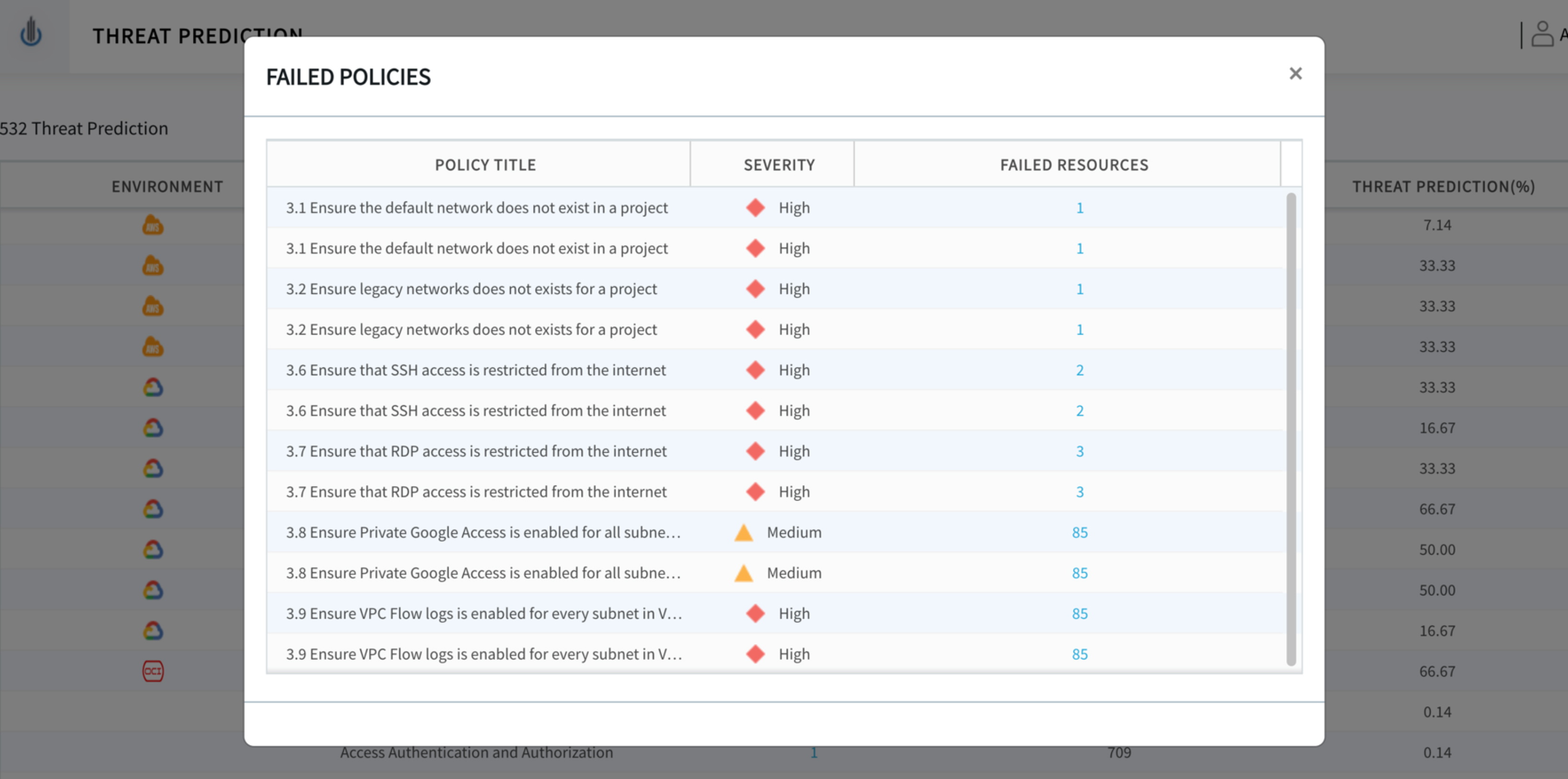
Fig – 1 above shows the policy failures while assessed against standard benchmark, which leads to Fig – 2, showing the number resources observed with the policy failures, pointing the potential threats.
The predictive analytics not only determines the potential threats but also empowers the security teams to take remediation actions and continue the best security practices.
Real-World Applications and Benefits
Organizations implementing AI-powered threat prediction are seeing significant improvements in their security posture:
Proactive Security Management: The predictive analytics in the platform identify the possible security breaches, where the vulnerabilities are most likely to emerge based on system misconfigurations, deviations and historical data patterns.
Advanced Persistent Threat Detection: Long-term attack campaigns that might evade traditional detection systems can be predicted and identified through AI analysis of subtle, seemingly unrelated activities over extended periods.
Insider Threat Prevention: By establishing baselines and monitoring for deviations, AI systems can predict potential insider threats before malicious actions occur.
Best Practices for Implementation
Organizations looking to implement AI-powered threat prediction should consider these best practices:
Start with Clear Objectives: Define specific use cases and success metrics before implementing predictive analytics solutions.
Ensure Data Governance: Establish robust data collection, storage, and processing procedures that comply with relevant privacy regulations.
Integrate with Existing Frameworks: Align AI initiatives with established security frameworks like CIS Controls, NIST, SOC 2, ISO, etc.
Invest in Training: Develop internal capabilities for managing and interpreting AI-generated insights.
The Future of Predictive Cybersecurity
As AI technology continues to evolve, we can expect even more sophisticated threat prediction capabilities. Emerging technologies like quantum computing, advanced neural networks, and federated learning will further enhance our ability to predict and prevent cyber threats.
The integration of AI with established security frameworks represents a paradigm shift in cybersecurity. Organizations that embrace predictive analytics and AI-powered threat detection will be better positioned to protect their digital assets, maintain compliance with security standards, and respond effectively to the ever-changing threat landscape.
The future of cybersecurity is predictive, proactive, and powered by artificial intelligence. By leveraging these capabilities within proven frameworks like CIS, NIST, SOC 2, NIST, etc., organizations can build resilient security postures that anticipate and neutralize threats before they become reality.
Ready to transform your organization's cybersecurity approach with AI-powered threat prediction? Contact our team of experts to learn how predictive analytics can enhance your security posture while maintaining compliance with industry standards and frameworks.
Written by :
Amarnath Bhadrashetty (Sr. Director, Product Management and CX).
Rakesh Polepeddi (Sr. Dev Lead).
- Details
- Category: Continuous Security Assessment & Remediation
In today's rapidly evolving threat landscape, cybersecurity teams face an overwhelming challenge: managing thousands of security alerts while ensuring compliance with complex policy frameworks. Traditional security approaches often operate in silos, treating alerts and policy compliance as separate concerns. However, Cavirin Systems is pioneering a revolutionary approach that bridges this gap through AI-driven cloud alerts to policy correlations, fundamentally transforming how enterprises understand and respond to security threats.
The Challenge: Alert Fatigue Meets Compliance Complexity
Modern enterprises generate an avalanche of Cloud security alerts from multiple clouds daily. Security operations centers (SOCs) struggle with such alert fatigue, where the sheer volume of notifications makes it difficult to identify genuine threats. Simultaneously, organizations must maintain compliance with numerous regulatory frameworks, industry standards, and internal security policies.
The traditional approach creates several critical problems:
- Disconnected Intelligence: Cloud security alerts exist independently of policy contexts, making it difficult to understand their broader implications
- Reactive Responses: Teams respond to individual alerts without understanding their relationship to overall security posture
- Compliance Blind spots: Policy violations may go unnoticed when they don't trigger immediate alerts
- Resource Inefficiency: Security teams waste time investigating low-priority alerts while missing policy-critical issues
The Cavirin Innovation in Cloud: Intelligent Correlation at Scale
Cavirin Systems addresses these challenges through advanced AI-driven correlation technology that connects Cavirin generated critical alerts for multi-cloud security events directly to Security/Compliance policy frameworks. This approach transforms raw cloud security data into actionable intelligence by understanding the relationship between real-time cloud events and organization’s infrastructure security policies.
Cavirin Platform performs the correlation in two steps.
- Generate Cloud event Alerts: Cavirin platform generates the varieties of alerts for the multi-cloud events observed via cloud monitoring offered by Cavirin Plarform.
- Correlation of Cloud Alerts to Compliance Policies: Cavirin Platform not only generates the cloud event alerts, but the AI engine correlates these alerts to security and compliance policies to determine possible remediation.
How AI-Driven Cloud Alert-to-Policy Correlation Works: The Cavirin platform employs sophisticated machine learning algorithms to analyze security events within the context of policy requirements. Here's how this revolutionary approach operates:
- 1. Contextual Alert Analysis: The AI engine doesn't just process cloud alerts in isolation. Instead, it evaluates each security event against the organization's complete policy framework, including regulatory requirements, industry standards, and custom security policies. This contextual analysis provides immediate insight into whether an alert represents a security policy violation or compliance risk.
- 2. Predictive Policy Impact Assessment: Advanced analytics predict how current security events in cloud might evolve into policy violations. The system identifies potential compliance issues before they become critical, enabling proactive remediation rather than reactive response.
- 3. Risk-Based Prioritization: After generating the cloud alerts, by correlating the generated cloud alerts with policy significance, the platform automatically prioritizes security events based on their potential impact on compliance and overall security posture. This ensures that security teams focus their attention on the most critical issues first.
- 4. Automated Compliance Mapping: The AI system automatically maps the Cavirin generated security alerts to relevant compliance frameworks, whether it's HIPAA, PCI DSS, or custom organizational policies. This eliminates the manual effort typically required to understand compliance implications of security events.
Real-World Applications and Benefits
The practical applications of AI-driven alert-to-policy correlations extend across multiple dimensions of enterprise security management:
Enhanced Incident Response
When a cloud security alert triggers, teams immediately understand its policy implications. For example, a data access anomaly isn't just flagged as a potential security issue – the system immediately identifies which data protection policies might be at risk, which compliance frameworks are affected, and what remediation steps align with policy requirements.
Proactive Compliance Management
Rather than discovering policy violations during audits, organizations can identify and address compliance gaps in real-time for the cloud events. The AI correlation engine continuously monitors for patterns that might indicate emerging policy violations, enabling preventive action.
Streamlined Reporting and Auditing
Automated correlation between cloud alerts and policies dramatically simplifies compliance reporting. Security teams can instantly generate reports showing how security events align with policy requirements, making audit preparation more efficient and comprehensive.
Industry Impact: From Noise to Actionable Insights
The introduction of AI-driven alert-to-policy correlations represents a significant evolution in cybersecurity strategy. Organizations implementing this approach report several transformative outcomes:
- Reduced Alert Fatigue: By providing policy context for alerts, security teams can quickly distinguish between routine events and policy-critical issues
- Improved Compliance Posture: Real-time correlation enables continuous compliance monitoring rather than periodic assessments
- Operational Efficiency: Automated correlation reduces the manual effort required to understand the business impact of security events
The Path Forward: A New Era of Intelligent Security
AI-driven alerts to policy correlations represent more than just a technological advancement – they signify a fundamental shift toward intelligent, context-aware security management. As organizations continue to face increasingly complex threat landscapes and regulatory requirements, the ability to understand the policy implications of security events becomes not just valuable, but essential.
Cavirin Systems' pioneering work in this area demonstrates how artificial intelligence can bridge the gap between technical security operations and business policy requirements. By providing real-time correlation between cloud alerts and policies, organizations can transform their security posture from reactive to predictive, from siloed to integrated, and from overwhelmed to optimized.
The future of cybersecurity lies not just in detecting threats, but in understanding their context, significance, and implications for the broader organizational mission. Through AI-driven alert-to-policy correlations, that future is becoming reality today.
Ready to transform your security operations with intelligent alert-to-policy correlations? Discover how Cavirin Systems can help your organization achieve context-aware security management that aligns technical operations with business policy requirements.

- Details
- Written by Amarnath Bhadrashetty (Sr. Director, Product Management and CX)
- Category: Continuous Security Assessment & Remediation
In today’s interconnected digital landscape, Artificial Intelligence has been playing a pivotal role in the technology and influencing the industries with its power and possibilities in different verticals of Technology Industry. Artificial Intelligence (AI) is transforming industries across the globe, and cybersecurity is no exception. In a world where cyber threats are becoming more sophisticated and frequent, AI offers powerful capabilities to detect, prevent, and respond to attacks with unprecedented speed and accuracy. From reactive process practices to counter the attacks and vulnerabilities, and even enhancing risk analysis, AI is reshaping the way organizations defend against malicious actors with proactive and predictive analytics. However, as AI strengthens cybersecurity measures, it also opens new avenues for adversaries to exploit. This blog delves into the intersection of AI Predictive Analytics, Cybersecurity, and Compliance Management, exploring how intelligent systems are redefining defense strategies while addressing the challenges of staying ahead in an AI-driven cyber landscape.
Predictive analytics, a powerful aspect of AI, that complements cybersecurity and compliance management for hybrid cloud environments. The Cavirin platform leverages predictive analytics to advance Hybrid Cloud Security Posture Management by forecasting infrastructure posture scores, enabling administrators to proactively maintain an audit-ready environment. By analyzing the large volume of assessment data, the platform not only offers a real-time view of security and compliance status but also delivers forward-looking insights, empowering organizations to anticipate the possible risks and allows the implementation of rapid remediation to ensure systems remain secure.
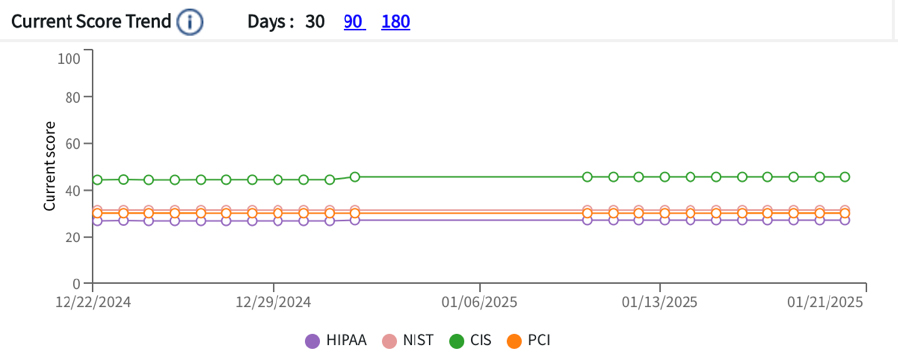
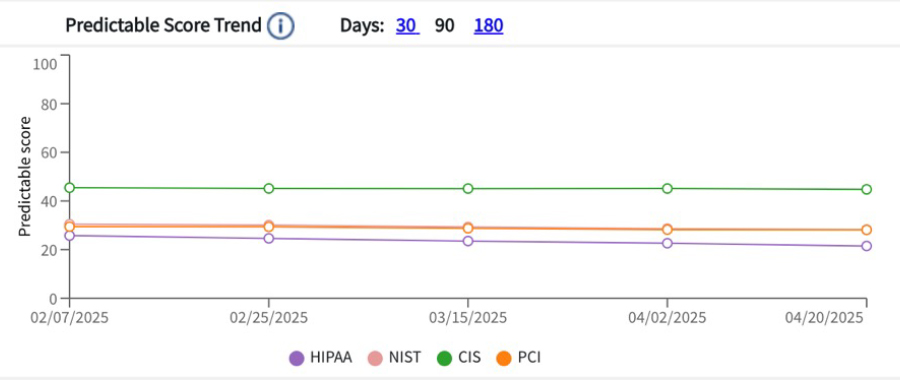
The Cavirin platform leverages AI-driven predictive analytics to analyze historical assessment data, enabling the projection of future security posture scores with defined timelines. By training AI models on the past assessment data, the platform generates actionable insights that help forecast potential posture changes. The historical data visualization provides a ‘Current Score Trend,’ while predictive analytics delivers a ‘Predictable Score Trend’ through intuitive graphical charts. Additionally, the AI-powered posture management feature incorporates a ‘Predictable Score Drift,’ which tracks the trajectory of specific benchmarks—whether improving or declining—indicating the level of attention required. The dashboard offers these predictive insights across various timeframes, including:
- 30 Days (One Month)
- 90 Days (One Quarter)
- 180 Days (Two Quarters)
These capabilities empower organizations to proactively address security and compliance gaps, ensuring a well-maintained and forward-looking security posture.
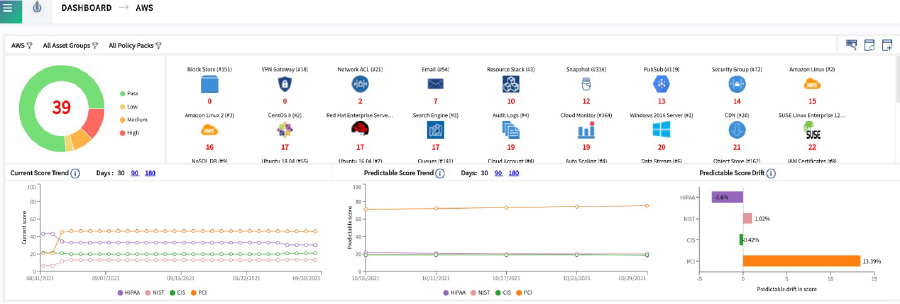
Some pictorial depiction of Predictive Analytics in the Cavirin Dashboard is as below.
Cavirin Dashboard:
Predictive Charts:
Current Score trend:
Predictable Score Trend:
Predictable Score Drift:
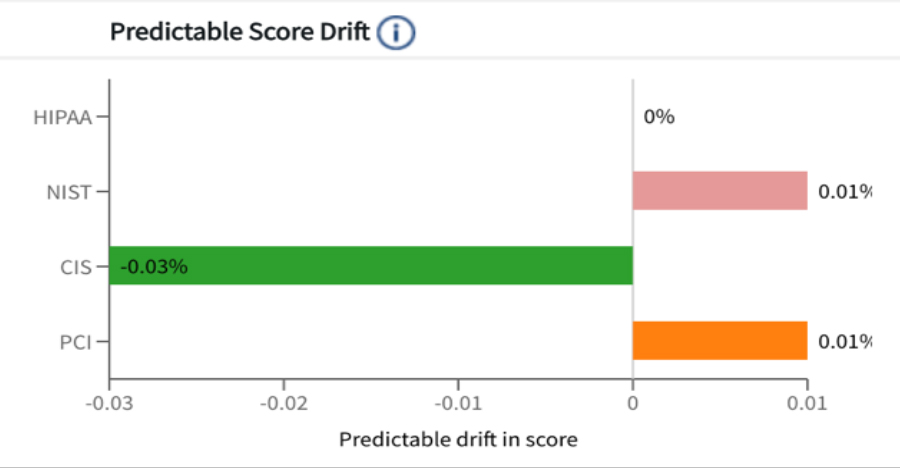
Cavirin’s predictive analytics provides significant advantages for decision-makers in several key areas:
- AI-Driven Cybersecurity Posture Management for Hybrid Cloud Environments
- Proactive readiness for upcoming Certification Audit events
- A Strategic window of opportunity to develop countermeasures for Security and Compliance assessments with effective eemediations
- Strengthening and redefining Security and Compliance best practices for an effective posture management
As Artificial Intelligence continues to play a pivotal role in the cybersecurity and compliance landscape, Cavirin’s AI-powered predictive analytics solutions serve as a game-changer, revolutionizing Cybersecurity Posture Management for Hybrid Cloud Architectures.
- Details
- Written by Amarnath Bhadrashetty (Sr. Director, Product Management and CX)
- Category: CyberPosture

What are your peers doing when it comes to cloud security?
Organizations continue to adopt cloud computing at a rapid pace to benefit from the promise of increased efficiency, better scalability, and improved agility.
While cloud service providers like Amazon Web Services (AWS), Microsoft Azure, and Google Cloud Platform (GCP) continue to expand security services to protect their evolving cloud platforms, it is ultimately the customers’ responsibility to secure their data within these cloud environments.
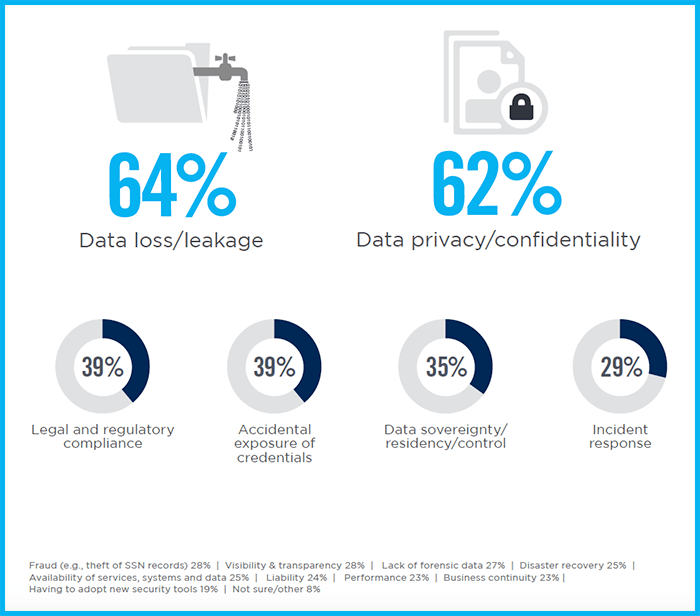
The 2019 Cloud Security Report (download) highlights what is and what is not working for security operations teams in securing their cloud data, systems, and services in this shared responsibility model. The results are a continuation of past challenges:
- The top cloud security concerns of cybersecurity professionals are data loss and leakage
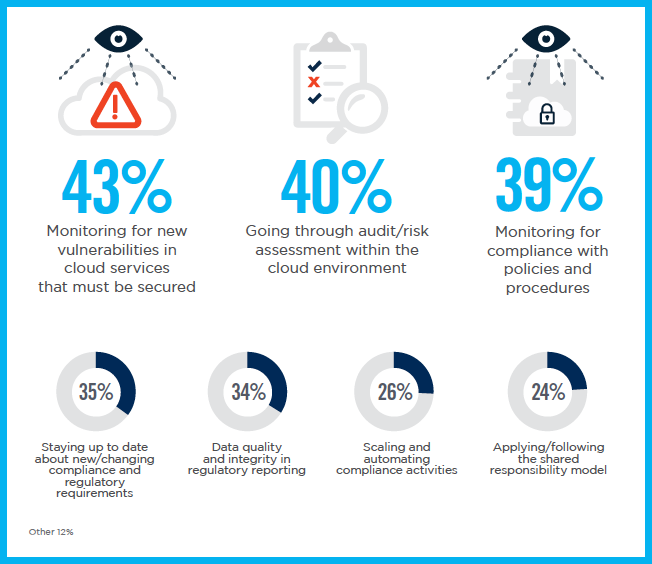
- The most challenging cloud compliance process that is most challenging for IT professionals is monitoring for new vulnerabilities in cloud services that must be secured. Following closely behind, as the second most challenging compliance process, is audit/risk assessments within the cloud environment.
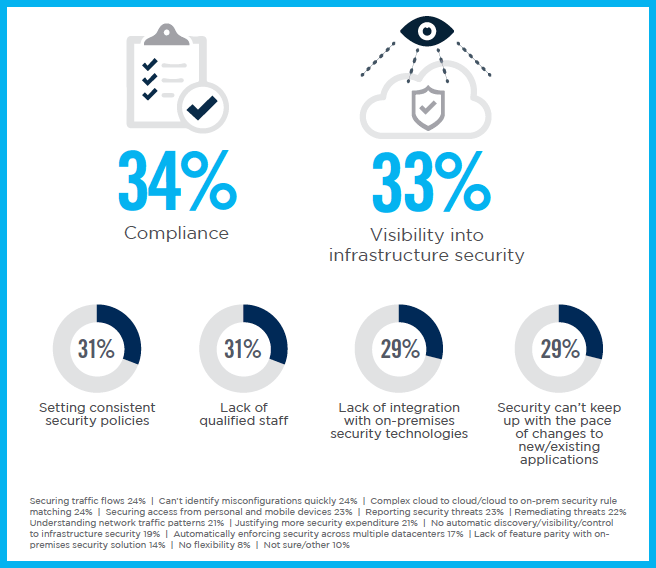
- The top two biggest operational security headaches teams are struggling with when trying to protect cloud workloads are compliance and lack of visibility into cloud security.
Overall, the findings in this report emphasize that security teams must reassess their security posture and strategies, and address the shortcomings of legacy security tools to protect their evolving IT environments. This 2019 Cloud Security Report has been produced by Cybersecurity Insiders, the 400,000 member information security community, to explore how organizations are responding to the evolving security threats in the cloud. Download the full report at https://www.cavirin.com/resources/2019-analyst-cloud-security-report
- Details
- Written by Rosella Fernandez
- Category: Trending in Security

Google Cloud Security Command Center and Multi-Cloud Lead the Way
Google Cloud Security Command Center
Last week, as part of a very successful and over-subscribed Google Next, we participated in the general availability announcement of Google’s Cloud Security Command Center (Cloud SCC). Cloud SCC is an intuitive, intelligent risk dashboard and analytics system for surfacing, understanding, and remediating Google Cloud Platform (GCP) security and data risks across an organization. The Cloud SCC Dashboard serves as a launching point for Cavirin’s CyberPosture Intelligence platform which includes assessment, monitoring, scoring, and remediation. Our deep integration with the Google Cloud Platform provides you visibility and manageability for Google Cloud Platform and hybrid cloud deployments, including multi-cloud deployments.
Google Multi-Cloud
Speaking of hybrid and multi-cloud deployments--Cavirin's sweet spot--we provide overall visibility, securing both workloads and cloud services, across any infrastructure, anywhere. Google’s focus on security across not only its own cloud but across the hybrid/multi-cloud in general, matches very well with Cavirin’s vision. Google’s deep commitment to multi-cloud deployments, unique amongst the three major providers, was announced with its Anthos open management architecture on April 9th. From Google:
“…..this is really the stack for the next 20 years, meaning that it’s not really about the three different clouds that are all randomly different in small ways. This is the way that makes these three clouds — and actually on-premise environments, too — look the same.”
Google’s new strategy is to encourage and protect multi-cloud deployments, a direction aligned with almost ¾ of organizations. Customers require a security solution that spans this hybrid infrastructure, looking at both workloads as well as any cloud services consumed. So you can see why I'm pretty stoked that the Cavirin solution, announced back in April 2018, aligns with the Google Cloud Platform strategy. Google’s native security tools are complementary to what Cavirin offers with continuous compliance and automation, visibility, and consistency, major concerns identified by organizations moving to or planning to move to the cloud.
Primary Cloud Deployment Strategy
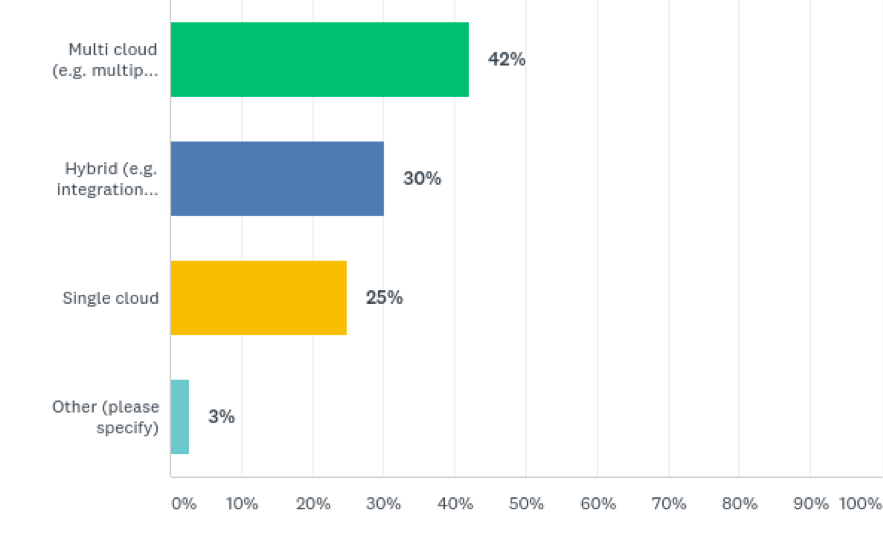
(Source: 2019 Cybersecurity Insiders Cloud Security Survey)
How Cavirin Fits Into Your Cloud Picture
The Cavirin solution leverages the broadest set of benchmarks, frameworks, and regulations, to continually assess the compliance and security score of workloads, both on-prem and across the hybrid/multi-cloud, immediately informing the operator of any security drift and recommending remediation. In some cases, the solution is able to carry out automated remediation via Ansible Playbooks, closing the loop from monitoring to change management. Scoring accuracy is improved by leveraging machine learning to better map and weight technical controls.
The same approach applies to cloud services, wherein the case of Google Cloud, the system continually monitors the various cloud services via StackDriver, identifying potentials for breach, and then triggering auto-remediation via Google Functions. This, along with Cavirin’s workload remediation, is the essence of closed-loop security for the hybrid cloud. In parallel, the system forwards all security observations to the Google Cloud SCC, where, in combination with other Google Cloud security services, the operator is presented with a unified and actionable view of his or her security posture.
Where the organization has implemented a true hybrid or multi-cloud architecture, Cavirin presents security findings from across the multiple clouds via the CyberPosture Dashboard, a simple-to-interpret view that correlates security and compliance and offers prioritized guidance.
So, check out Cavirin’s closed-loop security for Google Cloud and our SCC integration on the Google Cloud Marketplace.
- Details
- Written by David Ginsburg
- Category: Google Cloud Platform (GCP)

Come See us at Google Cloud Next ’19 – Booth S1409
Many of the most high-profile breaches from recent years have been caused by misconfigured servers and cloud services that left sensitive information exposed. Cavirin is focused on protecting your cloud, container and server resources in the Google Cloud Platform (GCP) and hybrid environments. At Google Cloud Next ’19 we will be demonstrating how customers can:
- Automatically discover 9 GCP cloud resource types including VPCs, subnets, Cloud Account (including Identity and Access Management (IAM)), Google Kubernetes Engine (GKE), Google Compute Engine (GCE), BigQuery, Cloud SQL and Cloud Key Management Service (KMS), and 22 operating systems
- Evaluate several thousand technical controls at the cloud, container and OS levels spanning configuration, compliance and vulnerability checks
- Compute a proprietary CyberPosture Score that helps you translate assessments into an easy-to-understand risk metric
- Prioritize remediation plans based on CyberPosture score improvement potential
- Auto-remediate, where possible, via Ansible and serverless (e.g. Google Functions) approaches
These features work in tandem to close the gap between proactive and reactive security in what Cavirin calls Closed Loop Security. With Closed Loop Security organizations can detect new, deleted or changed resources via Google StackDriver Monitoring, risk-score infrastructure changes to prioritize remediation plans and automate remediation via pre-built Google Functions.
Today, Google announced the general availability of Cloud Security Command Center in which we are thrilled to be one of its integration partners which helps security teams prevent, detect, and respond to threats from a single pane of glass. With our integration, customers will benefit from the following improvements:
Unified Dashboard for DevSecOps teams - Cavirin’s security, compliance and vulnerability findings will be presented in the Cloud SCC dashboard alongside findings from other security offerings that customers may have purchased.

Findings Prioritized by CyberPosture Scores. Each finding presented in the Cloud SCC dashboard represents a single configuration, compliance or security issue for one instance of 9 resource types. Cavirin presents up to 500 findings prioritized by their CyberPosture Score improvement potential, which is proportional to the relative risk of any finding based on the underlying technical control, its weight, resource criticality and other factors in Cavirin’s proprietary CyberPosture Scoring methodology.
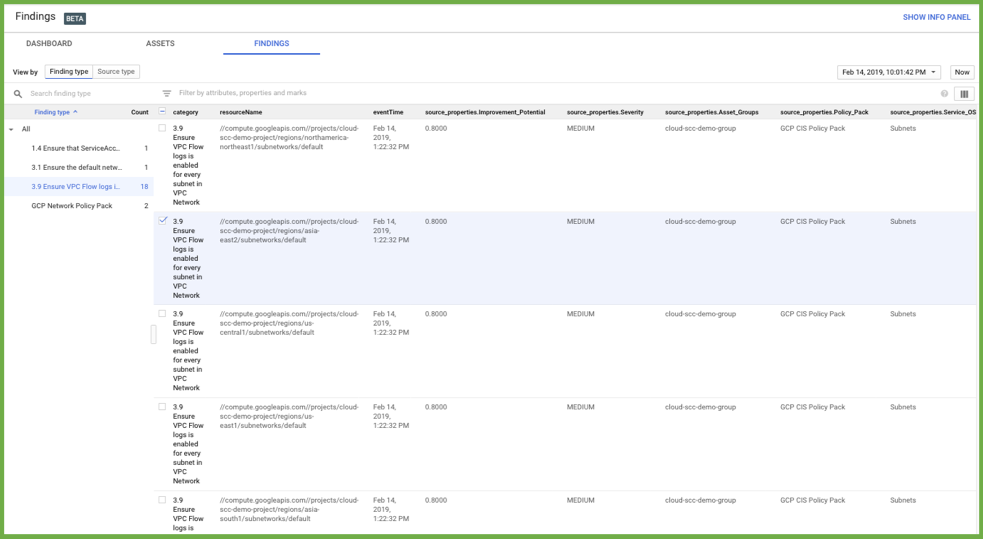
Actionable Finding Details - Each finding also presents additional details on the security or compliance control framework that generated the finding, the GCP identifier of the failed resource, CyberPosture Score improvement potential, remediation steps, and other details.

Comprehensive Security & Compliance Frameworks - Findings in Cloud SCC are powered by the following control frameworks that contribute over 80,000 technical controls. Several of these frameworks were led by Cavirin security experts:
- CIS GCP Foundation Benchmark, co-authored by Cavirin
- Cavirin GCP Network Policy Pack to protect against open TCP ports
- Compliance frameworks: GDPR, HIPAA, PCI-DSS 3.2, ISO 27002:2013, AICPA SOC2, CJIS
- Security frameworks: CIS (OS-level), DISA, CIS Google Chrome, NIST 800-171, NIST 800-53r4, NIST CSF, Cavirin Patches & Vulnerabilities
- Container frameworks: Cavirin Image Hardening, Cavirin Patches & Vulnerabilities, CIS Docker CE, Container Linux, CIS Kubernetes
CyberPosture Intelligence for GCP - Cloud SCC customers are one click away from the Cavirin dashboard with a “credit-score”-like representation of security and compliance posture across GCP, AWS, Azure, containers, and on-premises infrastructure. The Cavirin CyberPosture score helps customers analyze trends and drill into scores by asset group, environment, policy pack, cloud service, operating systems, and individual resources to pinpoint risk and prioritize remediation plans.

Making the magic work - Getting started with Cavirin and Cloud SCC is easy. Contact Cavirin to get you provisioned for Cloud SCC access. Once you have that information, please browse and find the Cavirin Cloud SCC Companion in the Google Marketplace. This application establishes trust and connectivity between Cavirin and GCP to post security findings about your organization’s GCP resources into Cloud SCC. Follow the self-service provisioning wizard steps for Cavirin Cloud SCC Companion (found in the Marketplace documentation).
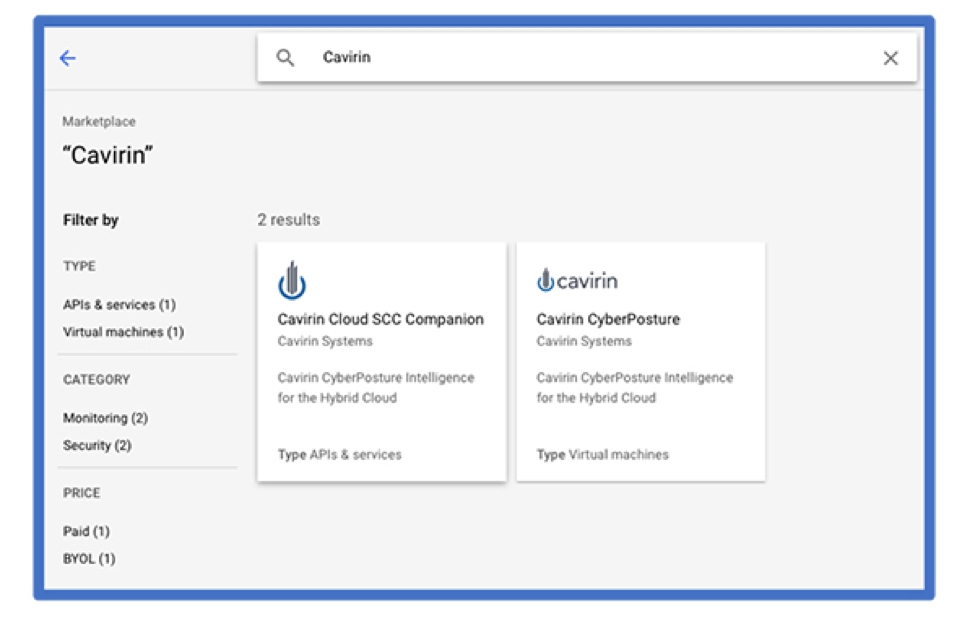
Next, provision the Cavirin CyberPosture managed VM app in the Google Marketplace.
Finally, connect Cavirin to GCP Cloud SCC using the integration steps within Cavirin.
Next Steps
- Check out Google's announcement, https://cloud.google.com/blog/products/identity-security/increasing-trust-in-google-cloud-visibility-control-and-automation.
- Find out more about how Cavirin works in the Google Cloud (including online demo)
- Reach out to Cavirin Sales to get you started with Cavirin
- Details
- Written by Bashyam Anant
- Category: Google Cloud Platform (GCP)
Subscribe

Tag Cloud
Categories
-
Continuous Security Assessment & Remediation (19)
-
Amazon Web Services (AWS) (4)
-
Cloud Migration (6)
-
CyberPosture (9)
-
DevOps (11)
-
Docker Container Security (8)
-
Google Cloud Platform (GCP) (2)
-
Regulatory Compliance (9)
-
Risk Management & Analytics (3)
-
Security Compliance Platform (10)
-
Security Programs and ISMS (4)
-
Trending in Security (28)